|
 |
 |
|
|||
| |||
| |||
| |||
|
|
|

|
|
|
Photo: http://rutracker.org/
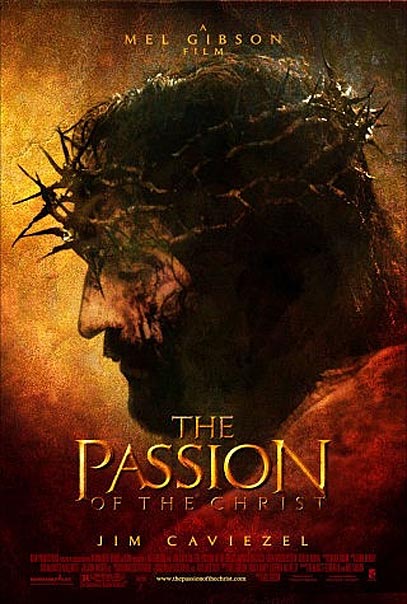
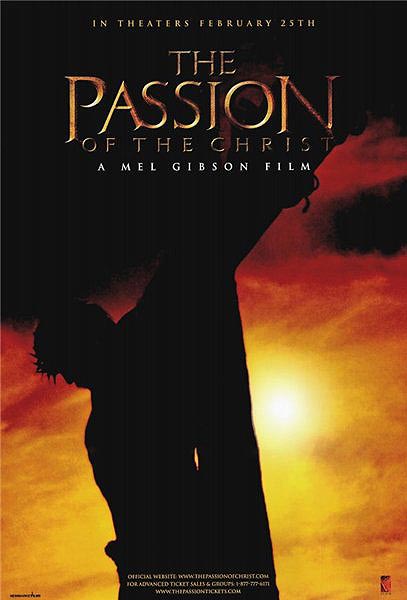
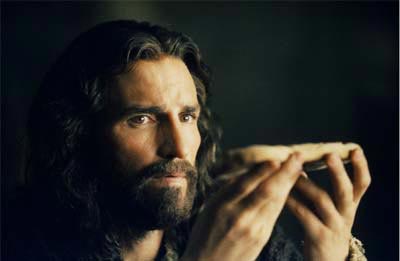
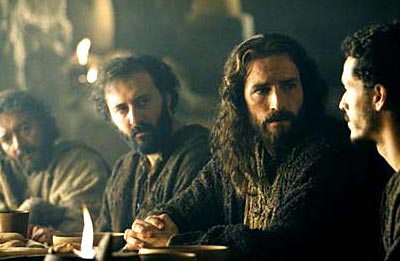
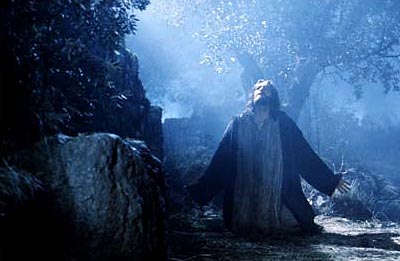
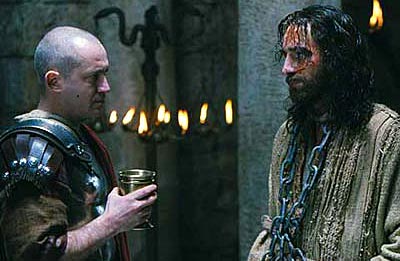
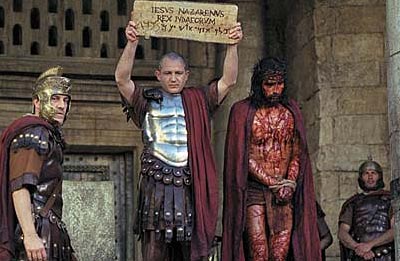
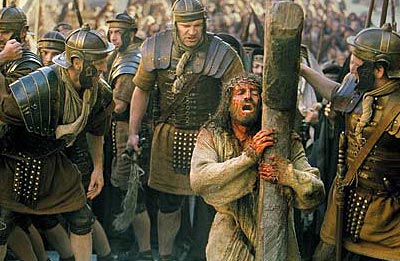
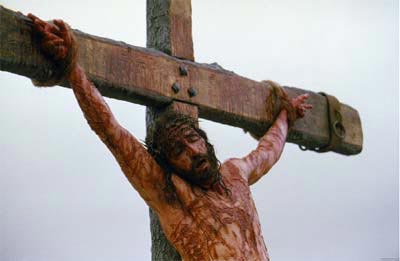
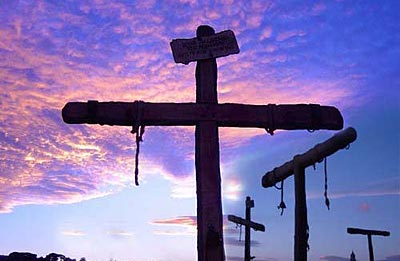
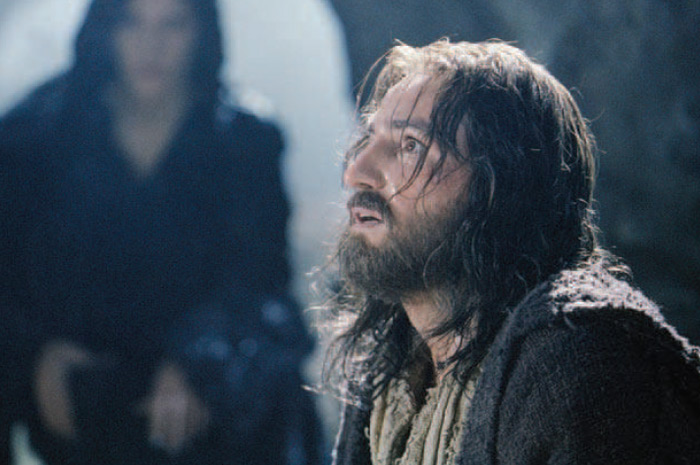
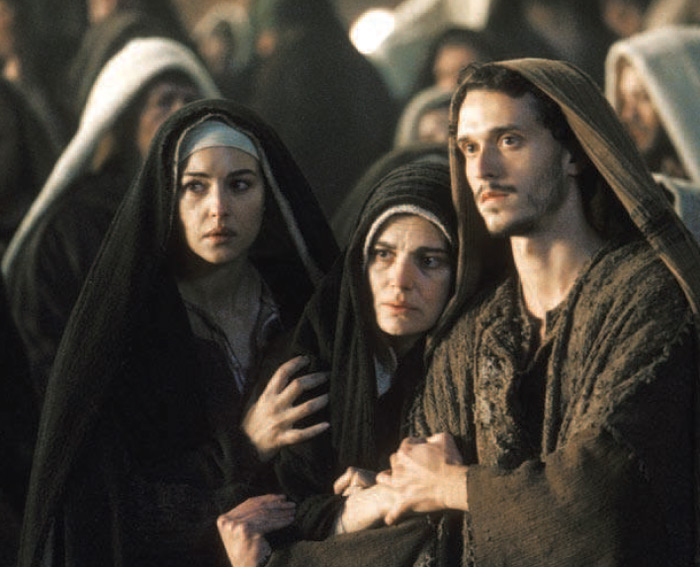
Photo - http://www.kinokadr.ru/section/passion.shtml The Passion of the Christ (Aramaic: ܚܫܐ ܕܡܫܝܚܐ, Hebrew: הפסיון של ישו, Latin: Passio Christi) is a 2004 film directed, co-written and co-produced by Mel Gibson. It is based on the New Testament accounts of the arrest, trial, torture, crucifixion, and resurrection of Jesus Christ, events commonly known as The Passion. The film’s dialogue is in Aramaic, Latin, and Hebrew, with English subtitles. It is the highest grossing non-English language and R-rated film ever to be released. PlotThe film opens in Gethsemane in medias res as Jesus prays and is tempted by Satan, while his apostles, Peter, James, and John sleep. After receiving thirty pieces of silver, one of Jesus' other apostles, Judas Iscariot, approaches with the temple guards and betrays Jesus with a kiss. As the guards move in to arrest Jesus, Peter cuts off the ear of Malchus, but Jesus heals the ear. The temple guards arrest Jesus and the apostles flee. St. Joseph tells Mary and Mary Magdalene of the arrest, and Peter follows Jesus at a distance. Caiaphas holds a trial of Jesus over the objection of some of the other priests, who are expelled from the court. When questioned by Caiaphas whether he is the son of God, Jesus replies "I AM." Caiaphas is horrified and tears his robes, and Jesus is condemned to death for blasphemy. Three times Peter denies knowing Jesus, but then runs away sobbing. Meanwhile, the remorseful Judas attempts to return the money to have Jesus freed, but is refused by the priests. Tormented by demons, he flees the city and hangs himself with a rope from a dead donkey. Caiaphas brings Jesus before Pontius Pilate to be condemned to death, but after questioning Jesus, Pilate sends him instead to the court of Herod Antipas, as Jesus is from Herod's ruling town of Nazareth. After Jesus is returned, Pilate offers the crowd that he will chastise Jesus and then will set him free. Pilate attempts to have Jesus freed by giving the people an option of freeing Jesus or the violent criminal Barabbas. To Pilate's dismay, the crowd demands to have Barabbas freed and Jesus killed. In an attempt to appease the crowd, Pilate has Jesus brutally scourged and mocked with a crown of thorns, yet the crowd continues to demand that Jesus be crucified. Pilate is left with no choice but to reluctantly order Jesus' crucifixion. As Jesus carries the cross along the Via Dolorosa to Calvary, Veronica wipes Jesus's face with her veil. Simon of Cyrene is unwillingly pressed into carrying the cross for Jesus. Jesus is then crucified. As he hangs from the cross, Jesus prays forgiveness for those who did this to him, and redeems a criminal crucified next to him. After Jesus gives up his spirit and dies, a single drop of rain falls from the sky, triggering an earthquake which destroys the Temple and rips the cloth covering the Holy of Holies in two, to the horror of Caiaphas and the other priests. Satan is then shown screaming in defeat in Hell. Jesus is lowered from the cross by one of the priests, Joseph of Arimathea; two Roman soldiers, one being Cassius Longinus; the Apostle Joseph and Mary Magdalene. He is laid in the arms of his mother Mary, who looks directly at the audience in this Pietà. The movie ends with Jesus's resurrection and exit from his tomb, with the holes in his hands from the nails visible as he walks, having triumphed over Satan's temptation and Death. ThemesIn The Passion: Photography from the Movie "The Passion of the Christ," Gibson says "This is a movie about love, hope, faith, and forgiveness. He [Jesus] died for all mankind, suffered for all of us. It's time to get back to that basic message. The world has gone nuts. We could all use a little more love, faith, hope, and forgiveness." He also explains one of his appearances in the film, the close-up of his hands nailing Jesus to the cross: "It was me that put Him on the cross. It was my sins [that put Jesus there]." Script and languageGibson originally announced that he would use two old languages without subtitles and rely on "filmic storytelling." Because the story of the Passion is so well-known, Gibson felt the need to avoid vernacular languages in order to surprise audiences: "I think it's almost counterproductive to say some of these things in a modern language. It makes you want to stand up and shout out the next line, like when you hear 'To be or not to be' and you instinctively say to yourself, 'That is the question.'" The script was written in English by Gibson and Benedict Fitzgerald, then translated by William Fulco, S.J. into Latin, reconstructed Aramaic, and Hebrew. Gibson chose to use Latin instead of Greek, which was the "lingua franca" of that particular part of the Roman Empire at the time, so that the audience could easily distinguish between the sound of Italianate Latin and Semitic Aramaic. Fulco sometimes incorporated deliberate errors in pronunciations and word endings when the characters were speaking a language unfamiliar to them, and some of the crude language used by the Roman soldiers was not translated in the subtitles. The pronunciation of Latin in the film is closer to ecclesiastical Latin than to more historically accurate classical Latin. (Clear instances of this can be heard when Pontius Pilate says "veritas" and "ecce".) Directed by Mel Gibson Produced by Bruce Davey, Mel Gibson, Stephen McEveety, Enzo Sisti Written by Benedict Fitzgerald, Mel Gibson Starring: James Caviezel, Maia Morgenstern, Monica Bellucci, Hristo Naumov Shopov, Mattia Sbragia, Rosalinda Celentano Music by John Debney Cinematography: Caleb Deschanel Editing by John Wright Studio: Icon Productions Distributed by Newmarket Films, Twentieth Century Fox (DVD release) Release date(s): February 25, 2004 (2004-02-25) Running time Theatrical cut: 125 minutes Country: United States, Italy Language: Aramaic, Latin, Hebrew Budget: $30,000,000 Information: http://en.wikipedia.org/wiki/The_Passion_of_the_Christ More than a MasterpieceMel Gibson’s film on the final 12 hours in the life of Jesus is more than a masterpiece of cinematographic art. The movie — as the director tells us — simply seeks to tell the truth. I wanted it to be as real as possible. Christ suffered and died for everyone. That was the reason he came and died on the cross. That is why everyone who sins needs to admit his own fault and responsibility. The time has come to return to the basic message we received. The world has gone mad. Christ spoke about faith, hope, love and forgiveness. He forgave his torturers and killers. We also need to take something of this attitude.
The director makes use of the language of film to reproduce in the minutest detail the shocking gospel accounts of the passion and death of Jesus. His total fidelity to the Gospel texts, the use of Aramaic and Latin used by the Jews and Romans of the time, the painstaking reconstruction of Jerusalem and the topography of the place where these dramatic events took place — all this enables the viewer of the film to become a participant in the single most important event in human history. It was the event that determined our salvation. It marked Christ’s definitive victory over Satan, sin and death. Mel Gibson is a deeply convicted Catholic, a staunch believer in conjugal fidelity and the sanctity of life from conception to natural death. He has seven children. His 24 years of marriage are a shining example of true marital and fatherly love. He is a daily communicant and devotes a good part of every day to personal prayer. His success as a Hollywood actor won him fame, an Oscar, and great wealth. At the height of his career, at the age of 35, he fell away from his faith. I fell into a nightmarish situation — he recalls — a real nightmare. So terrible that I was ready to leap out of a window… When you reach that point, when you don’t want to live and you don’t want to die, that is a nightmare. I just fell on my knees. I had to immerse myself in Christ’s passion and wounds to heal my own wounds. After this experience, Gibson returned to the practice of his Catholic faith with the zeal of a convert. I believe — he said in an interview with USA Today — that my entire career led me to making this movie. As I was filming it, I felt the Holy Spirit speaking through me. All I did was do what I felt guided to do. It’s my hope this movie will convey the power of the Gospel. The director set out to change people’s thoughts and attitudes so that by viewing Christ’s suffering they could suffer with Him. Only then could they understand that Jesus suffered and died for us and for our salvation. The aim of this movie — says Gibson — is to tell the truth. I want it to be as faithful to the truth as possible so that everyone seeing it will stop to think about the reasons why Christ came and why He was crucified. He died for the whole human race, suffered for all of humanity. So really everyone who sins should see the role he plays in this, and accept responsibility.
The making of The Passion of the Christ was a moving experience for the entire filming crew. We had among us Muslims, Jews, Christians, Buddhists, as well as agnostics — observes Gibson — and we all worked in perfect harmony. Mass was said every day before work began on the film set. While the Sermon on the Mount scene was being shot, Jim Caviezel, who plays the role of Jesus, was struck by lightning and survived. All the actors witnessed this extraordinary event. In their spare time people held lively discussions on the subject of faith. The mood and intensity of the spiritual experiences during the filming of the Passion was so strong that several Muslims and agnostics embraced the Christian faith. For Mel Gibson himself, the movie became the cause of undeserved suffering, a personal experience of Christ’s way of the cross. He was unfairly condemned, attacked, mocked and derided for his courage in confessing his faith and adherence to the teachings of the Catholic Church. On opening night of the Passion in the USA, Gibson said: I’ve become the object of a witch-hunt. As an artist I can’t be offended, and I forgive those who have attacked me: But I have to say: Enough! We can’t let bigots dictate the way we live, believe and do art. They’ve made a villain out of me. Yet all I do is pray. For myself, for my family, for the world. For people of good will, Gibson’s Passion is a moving experience. It is an invitation to come to know more closely the person of Christ, who desires to offer everyone His boundless mercy and a part in His victory over sin and death. Everything in the Passion comes straight from the Gospel. There is nothing in the film that does not come from there. Those who criticize the film criticize the Gospel — said Archbishop John Foley, President of the Pontifical Council for Social Communication, after seeing the film. Observed Cardinal Anthony Bevilacqua: For me art is a manifestation of God’s attributes, His beauty, His mercy, His love. The Passion contains all these things. It shows God’s infinite love for us, and what He has done for us. Cardinal Castrillon Hoyos, Prefect of the Sacred Congregation for the Clergy observed: On seeing the film, I experienced a profound spiritual closeness with Jesus Christ. This film leads the viewer toward prayer, reflection and meditation that flows from the deepest recesses of the heart. I have read accounts of the Lord’s Passion — said Cardinal Francis George of Chicago — I have meditated on them and used many of them in my prayers, many times, but I have never reflected on the Crucifixion with the aid of such images as came to me upon viewing this film. I will never read these words the same way again. On viewing the film, the Holy Father himself is alleged to have said: It is as it was. By Father Mieczyslaw Piotrowski TChr,
Смотрите также: Христианские фильмы
Recommend this page to your friend!
|
|
|
|
|
|